The U.S. Small Business Administration's Office of Advocacy published its annual Frequently Asked Questions bulletin on February 3, 2026, updating the core federal statistics on America's small businesses. For founders, the bulletin matters for a narrow, practical reason: these are the numbers that anchor market-size claims, grant applications, and the "SMB segment" slides in every pitch deck — and citing the current edition beats citing a version your template carried since 2023.
This is a summary of a government statistical release, not policy analysis or advice.
What's in the bulletin?
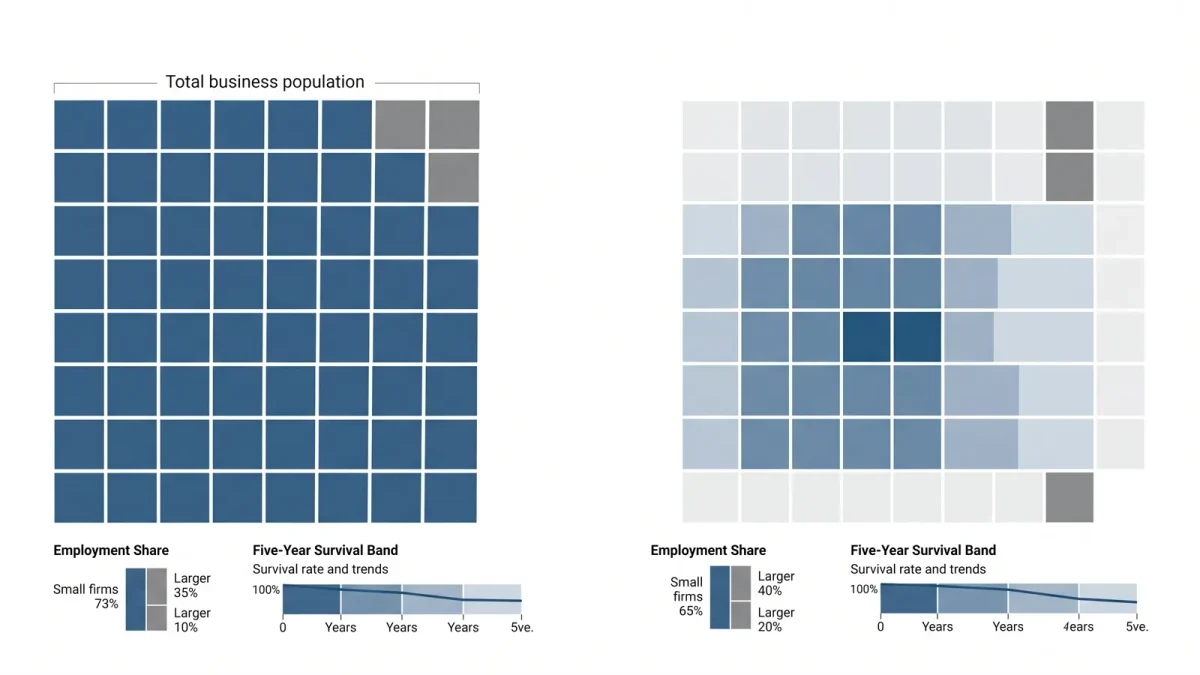
The annual FAQ consolidates the Office of Advocacy's core figures: the count of U.S. small businesses, their share of private-sector employment, net new job creation shares, survival rates by age of firm, and the demographic composition of ownership — drawn from Census Bureau and Bureau of Labor Statistics source data. It is the standard citation for the facts founders quote constantly: that small firms make up the overwhelming majority of U.S. businesses, that a large share of net new jobs come from young firms, and that survival curves show roughly half of new establishments lasting five years — the figure that frames both the risk and the upside of starting. The 2026 edition continues the series' methodology of reporting with a lag on source data, so founders citing it should pair the headline figures with the as-of years the bulletin itself prints.
Why should a founder care this quarter?
- Pitch accuracy: investors diligence market-size slides; the Advocacy citation with the right year is the cheapest credibility marker available.
- Program and grant applications: federal and state small-business programs reference these definitions and counts — applications that cite stale figures age visibly.
- Segment math: if your product serves small businesses, the bulletin's industry and size-class breakdowns are the denominator for your serviceable-market arithmetic.
One overlooked detail worth the read: the bulletin's survival data consistently shows that it is young firms — startups — rather than small firms generally that drive net job creation, a distinction that matters when a founder's story is about growth rather than lifestyle.
Where to read it
The bulletin is available from the SBA Office of Advocacy at advocacy.sba.gov, published February 3, 2026, with prior editions archived for trend comparison. Founders who cite it in materials should reference the specific tables used — the bulletin's employment and survival figures come with their own source-year footnotes, and quoting the edition without the year is how numbers drift into myth. For a two-page read, it remains the highest-density public source on the segment most of our readers are building for.