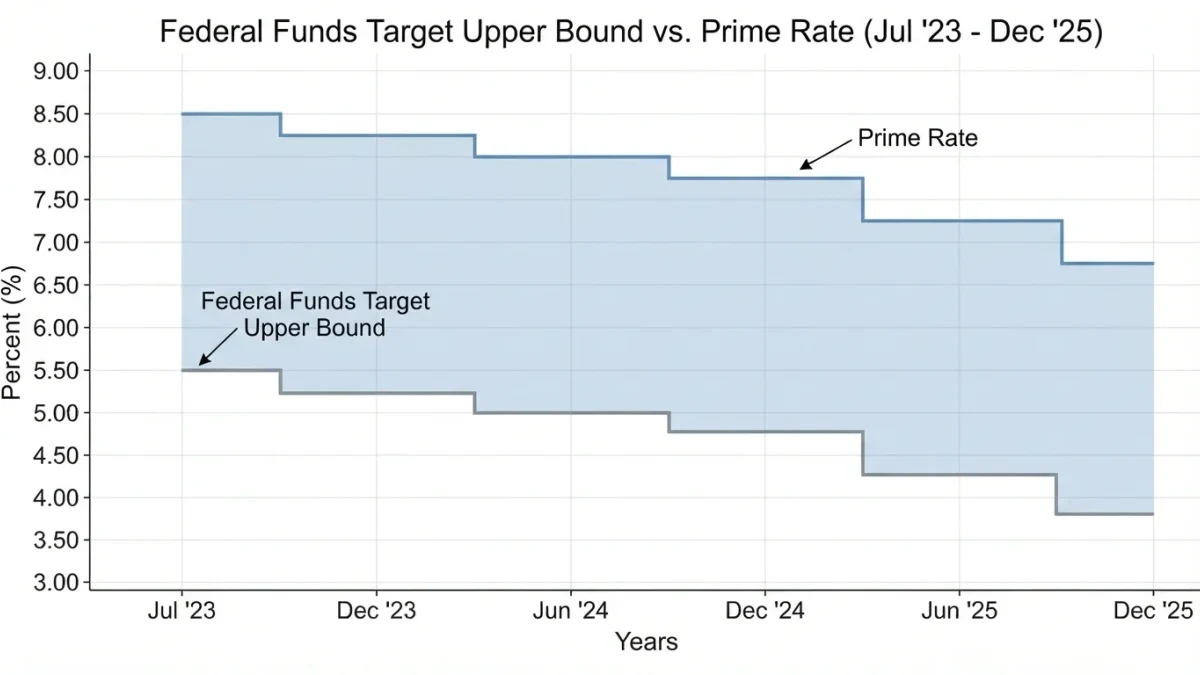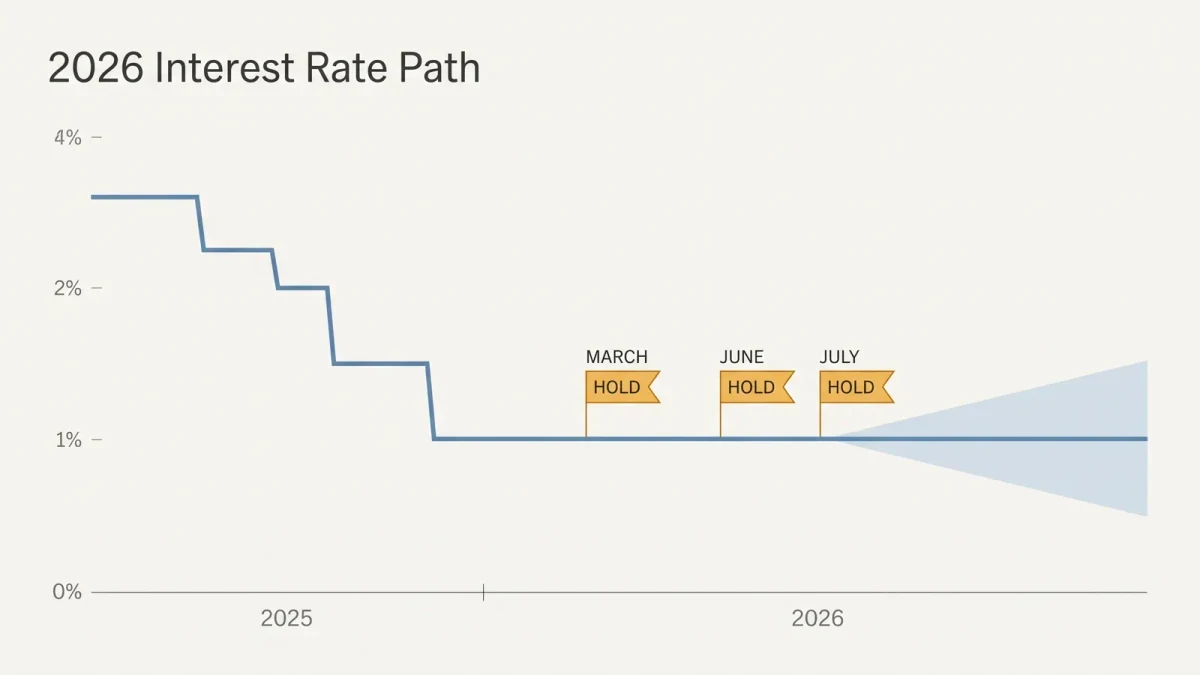
The Federal Reserve held the federal funds rate at 3.50–3.75% on July 29, 2026, per the FOMC's official statement — the third straight hold after the three cuts of late 2025, extending a plateau that now spans the entire first half of the year. Coverage described the decision as a cliffhanger into the meeting, per CNN reporting, with inflation near a three-year high per ABC News and market measures continuing to price a possibility of a hike rather than cuts by year-end. Founders planning the back half of 2026 now have their answer about the environment: this is it.
The year in one paragraph
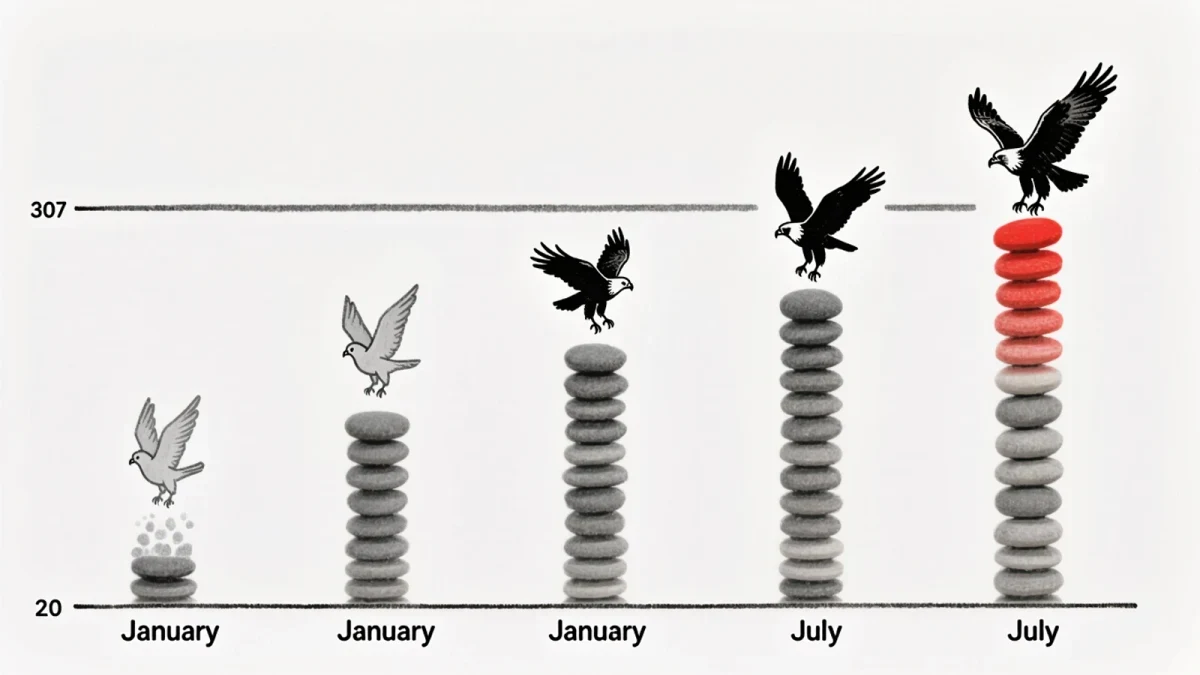
December 10, 2025: a quarter-point cut to 3.50–3.75%, the third consecutive. March 18, 2026: a hold on an 11–1 vote with divided minutes. June: a unanimous hold. July 29: another hold, with inflation pressure keeping the committee's hawks audible. The full sequence — cut, cut, cut, hold, hold, hold — describes a central bank that finished an easing cycle and refuses to promise more while inflation runs warm. For any business decision priced off the cost of money — debt, prepay discounts, customer budgets, fundraise timing — the first seven months of 2026 have delivered a single, consistent message: capital costs what it costs.
What three holds change operationally
- Retire the rate-cut option from your model: any plan row that says "refinance when rates fall" is now a placeholder for a hope the committee has declined three times; replace it with current-pricing scenarios, up and down.
- The hike scenario gets a real weight: with inflation near three-year highs and market pricing a possible hike, per contemporaneous reports, a modest stress test — one percentage point on floating-rate debt, slower budget releases from leveraged customers — belongs in the model even if it never happens.
- Cash discipline stays the edge: the companies outperforming in this environment share one habit from the 2023–2024 playbook: extended runway via annual prepays, pricing on value, and burn multiples boards applaud. Nothing about July gives that back.
The overlooked angle: a plateau this long stops being macro and becomes structure — customers' budget norms, lenders' term sheets, and investors' return requirements have all reset around it. Founders who spent 2026 waiting for the old environment to return have been pricing against a memory; the market cleared at these rates, and the winners priced for it in January.
What to watch from here
The fall meetings, with the inflation series as the swing variable — cooling numbers reopen the cut conversation, hot ones make the hike chatter serious. But the founder posture shouldn't move with the meeting calendar anymore: model flat, stress up, and build the value-framed sales case that a plateau economy pays for. Three holds is not news; it's the weather. Dress for it.