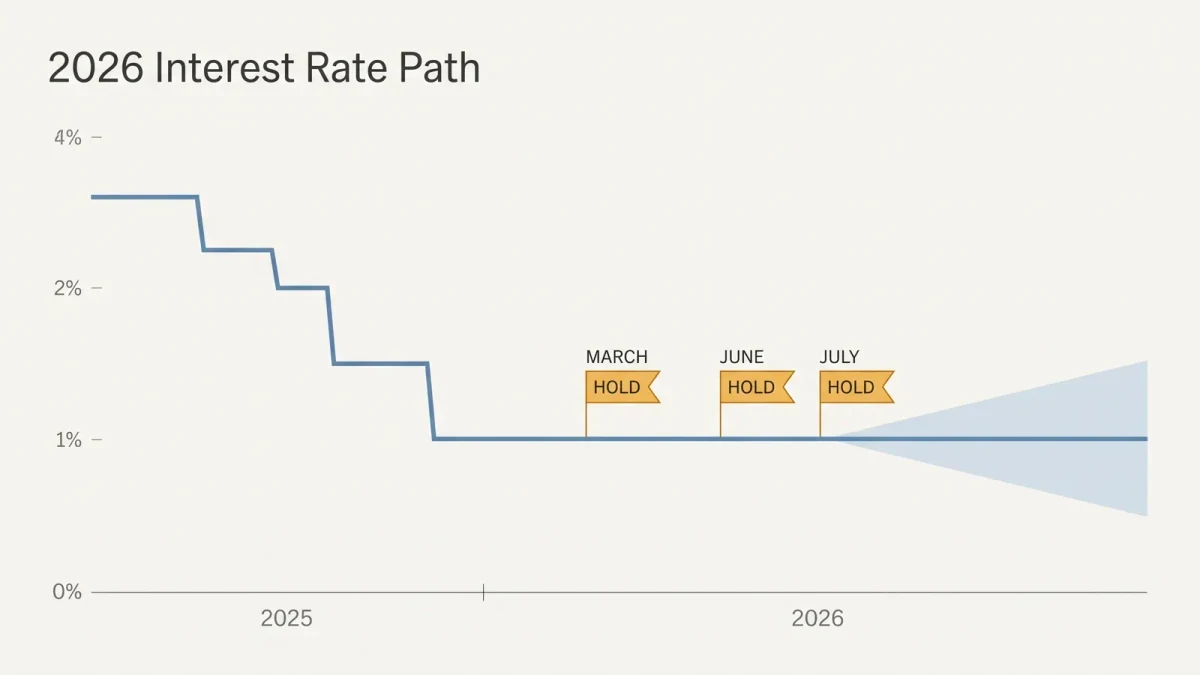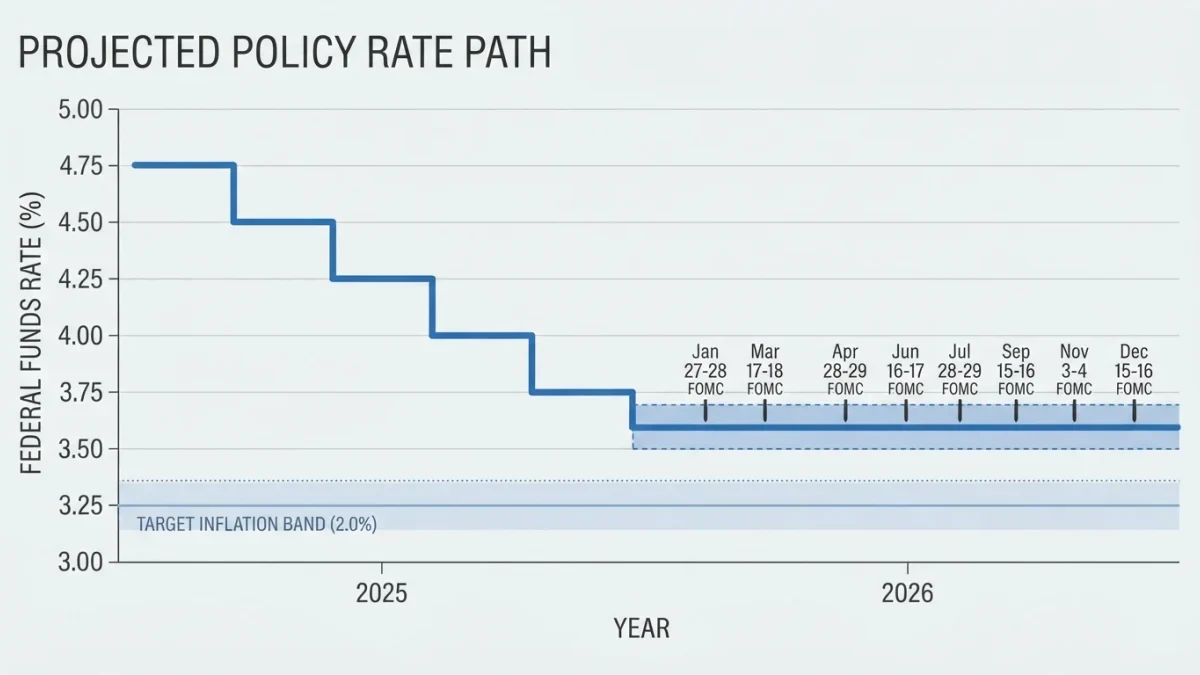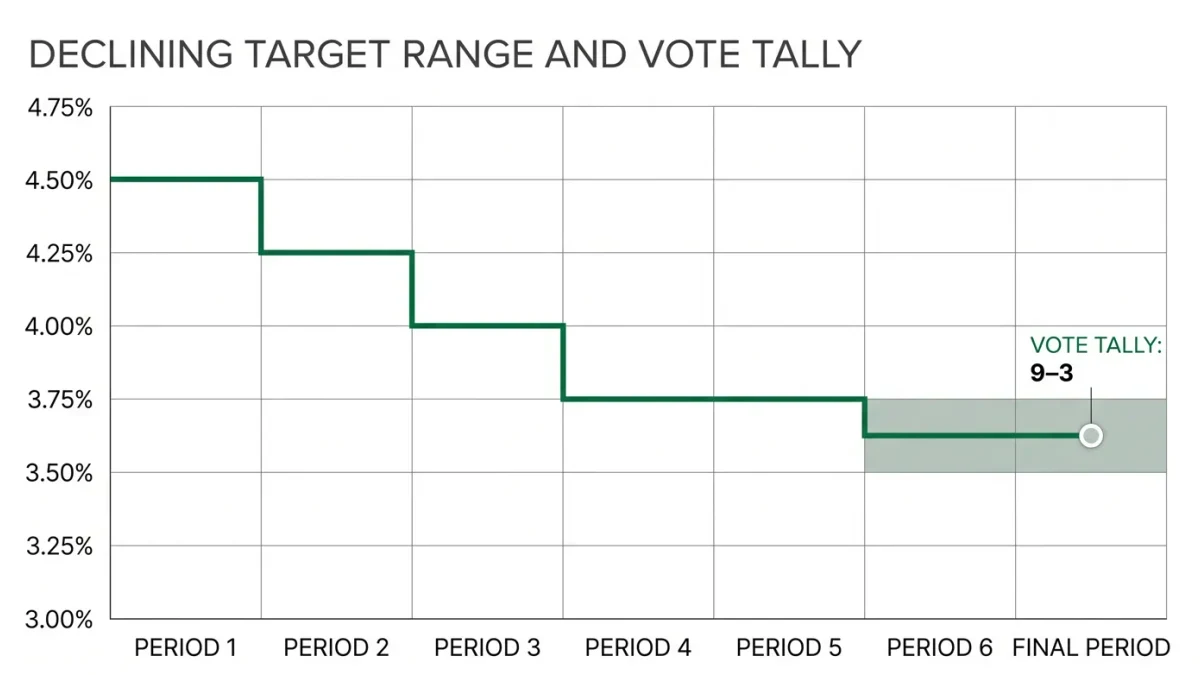
The Federal Reserve cut the federal funds rate by a quarter point on December 10, 2025, its third consecutive cut, setting the target range at 3.50–3.75%, per the FOMC's official statement. For founders, the practical change is modest but real: working-capital lines, credit card APRs, and equipment loans reprice downward with a lag, while the more consequential signal — division inside the committee about what comes next — argues for planning on capital staying costlier than the 2010s ever required.
This is reporting and analysis, not financial advice; borrowing decisions deserve a professional read of your own terms.
What actually changed on December 10?
Per the Federal Reserve's statement, the Committee lowered the target range by 25 basis points to 3.50–3.75%, with the interest rate on reserve balances set at 3.65% effective December 11. The rationale cited downside risks to employment, per the Congressional Research Service's summary of the decision. The minutes, released around December 30, revealed deep divisions among officials about the path ahead — a detail founders shouldn't skim, because it means the market's assumption of further easing is contested inside the room making the decision. One overlooked line for small businesses: prime-based lending reprices almost immediately with the policy rate, so existing variable-rate lines of credit got marginally cheaper without any renegotiation, while new fixed-rate term loans price in the market's forward expectations, not just today's cut.
What does it change for an early-stage company?
- Venture math, barely: valuations and round dynamics respond to liquidity conditions over quarters, not one cut; founders mid-raise should read the December action as a stabilizing signal, not a catalyst.
- Debt capital, modestly: revenue-based financing, venture debt, and working capital lines priced off short rates get a small tailwind — relevant for companies bridging between rounds or financing receivables.
- Customer budgets, indirectly: your customers' own borrowing costs shape their appetite for new tools; a friendlier rate environment supports the budget conversations SaaS vendors have been fighting through tighter years.
The disciplined takeaway for runway planning: model your next eighteen months on rates staying in this range, not falling further — the committee's own divisions, per the minutes reporting, make the downside of that assumption cheap and the upside of assuming more cuts expensive.
What should founders do this month?
Three concrete moves. Review variable-rate debt for repricing accuracy — lenders apply cuts with varying speed, and an unadjusted line is a phone call. If a bridge or term facility was deferred waiting for cheaper money, the current range is a reasonable moment to transact rather than wait for a consensus the committee doesn't have. And keep the rate environment in the pricing conversation: inflation pressures on customers' budgets persist, per contemporaneous reporting on the inflation picture into early 2026, which argues for the annual-prepay discount that protects your cash rather than the optimism that argues for waiting. The cut helps at the margin; the plan still belongs to whoever manages the margin deliberately.