Strategy here means choosing what a small company will not do. Articles cover positioning against larger incumbents, pricing power and how it is built, the order in which markets are entered, and the second-order effects of a competitor's response. Aimed at founders and operators making irreversible calls with incomplete information.
Runway is cash in the bank divided by average monthly net burn — and the number that matters is the one that accounts for the invoices you have not paid yet, not the balance your banking app shows.
A SAFE lets you take a check today without setting a valuation today. Here's what the cap, the discount, and the conversion trigger actually commit you to.
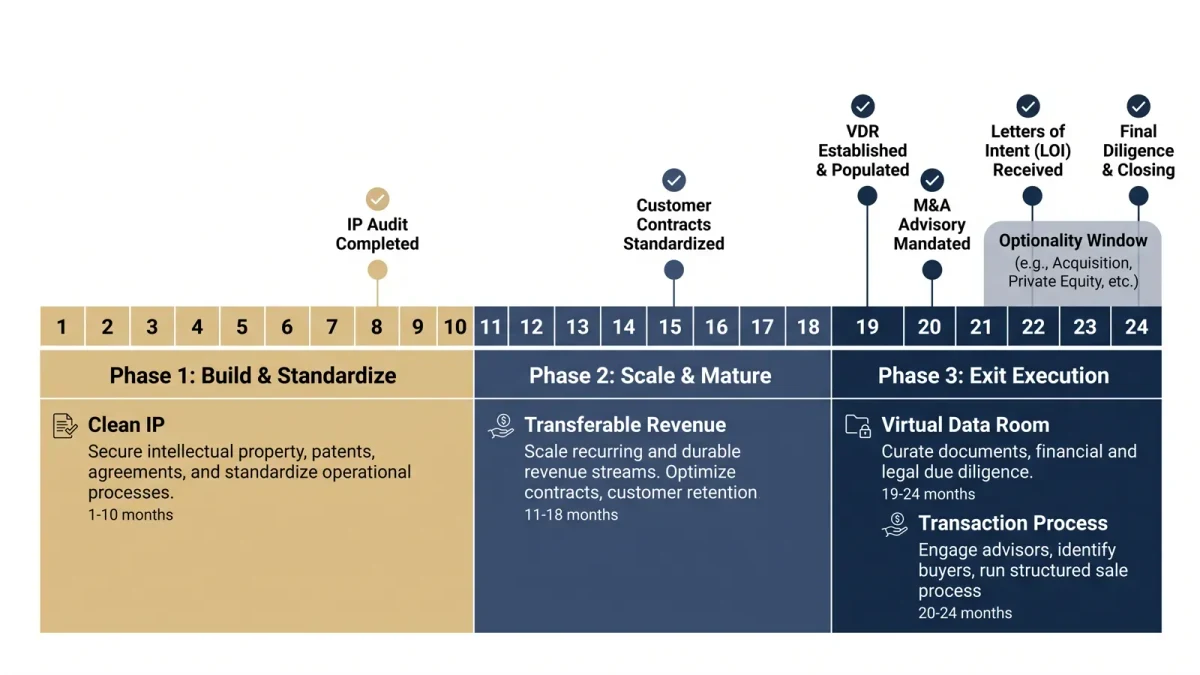
You prepare an exit the day you structure the company — clean IP, low key-person risk, transferable revenue — because acquirers price readiness, not just revenue.
Business model innovation changes who pays, for what, or how — and it's frequently cheaper and more defensible than another quarter of feature roadmap.
The motion follows the buyer — self-serve products for users who can try without permission, sales-led motions for committees — and pretending otherwise just buys the wrong funnel.