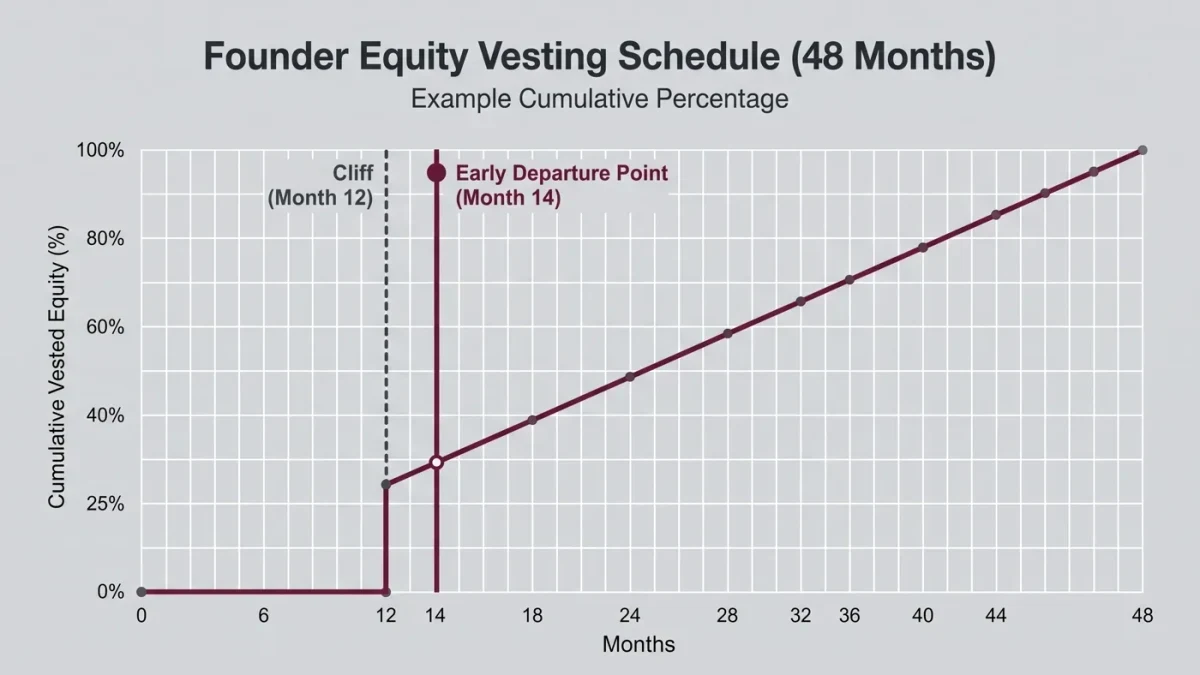
A cap table is the list of who owns what percentage of your company, and its basic hygiene comes down to three habits: put every equity grant in writing with vesting, size the option pool to real hiring plans, and never let handshake promises or advisor shares accumulate outside the official record. The mistakes that matter are unrecoverable ones — unvested founder shares given to someone who leaves in month five, side letters promising "we'll make it right later," and pools set by investors so large they quietly re-price the round. Fixing a cap table retroactively requires signatures you cannot compel after people are gone.
Equity decisions interact with tax and securities law; this is an operational guide, not legal advice, and grants should go through startup counsel.
What belongs on a cap table from day one?
Every share and every option: founders' common stock with vesting, the employee option pool, advisor grants, any SAFE or convertible instrument listed separately (they are not ownership yet, but they will be), and investors' preferred stock by round. The table distinguishes fully diluted ownership — everything that could become shares — from outstanding shares. Keep one source of truth, whether that is a spreadsheet with version history or cap table software; the version investors see in diligence and the version your lawyer has must be the same document. Per guidance in the U.S. Small Business Administration's business guide on ownership structure, recording ownership and its terms precisely from formation is standard practice for any company taking outside money or issuing equity compensation.
Why does founder vesting protect the founders?
Founder vesting — typically four years with a one-year cliff — means shares are earned over time, and unvested shares return to the company when someone leaves. It sounds anti-founder, but it protects the staying founders from the leaving one: without vesting, a co-founder who departs in month seven keeps their full stake forever, and every future investor will demand the fix, on worse terms, at the round's edge. Grant-date mechanics matter too: in the U.S., founders filing an 83(b) election within 30 days of a restricted stock grant pay tax on near-zero value now instead of income rates on appreciated value as it vests — an election that cannot be filed late.
How do you size the option pool without giving away the trick?
The pool is the shares reserved for hires, usually 10–15% post-first institutional round. The negotiation that matters is whether the pool comes out of the pre-money or the post-money: a pool "topped up" pre-money is funded entirely by existing holders — mostly founders — before the new money's percentage is computed, which is why the same headline valuation can hide meaningfully different founder outcomes. The honest counter is a hiring plan: list the roles you will make in the next 18 months, apply standard grant ranges by level, and size the pool to that list. An investor pushing a pool larger than your plan justifies is re-pricing the round, and the hiring plan is how you say so with a number instead of a flinch.
What are the classic cap table wounds?
- The early departure: a departed co-founder or early employee holding 15% unvested-never-clawed-back, chilling every future raise.
- The advisor stack: five advisors at 1% each for calls that stopped in year one.
- The over-subscribed friend-and-family round: two dozen small preferred holders whose consent rights make every later deal a signature chase.
- The forgotten promises: verbal top-ups and side letters that surface during diligence as disputes.
Each wound was avoidable with a document at the time. Diligence is where undocumented claims get repriced by everyone else at the table.
How often should you review the cap table?
Quarterly at minimum, and before every event: a fundraise, a major hire, an option re-pricing, or acquisition interest. Review means reconciling three numbers — what the table says, what your lawyer's records say, and what your payroll or stock administration platform shows. Small drift between systems is normal; unnoticed drift compounds into a diligence delay. A founder who can produce a reconciled, fully diluted cap table in a day signals operational maturity out of proportion to the effort it takes.
FAQ
| Item | Healthy pattern | Warning sign |
|---|---|---|
| Founder shares | 4-year vesting, 1-year cliff, 83(b) filed | Unvested, no vesting at all |
| Option pool | Sized to an 18-month hiring plan | Round-sized by investor default |
| Advisors | 0.1–0.5%, 2-year vesting, defined scope | Multiple 1%+ grants for availability |
| Convertible instruments | Listed with caps and amounts, conversion modeled | Forgotten SAFEs surfacing at the round |
Keep it written, keep it vested, keep it reconciled. The cap table rewards boring consistency more than brilliance — then let the lawyers handle the exceptions.