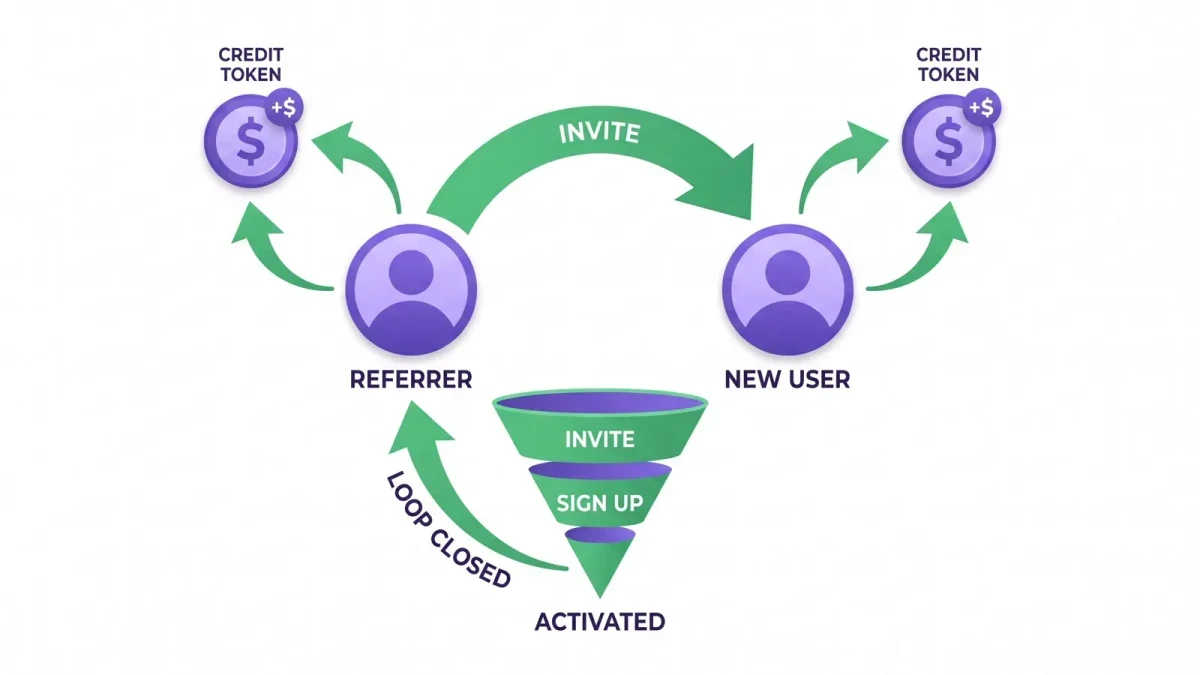
A referral program produces real volume only when three preconditions hold: customers are genuinely satisfied (post-success, not just post-signup), the product is explainable in one sentence by a non-user, and the ask arrives at a moment of demonstrated value — right after the workflow's first win, not in a monthly newsletter. Reward design matters less than founders assume; timing and friction matter more. A mediocre reward at the perfect moment outperforms a generous reward buried in settings.
This is a growth-mechanics guide; referral incentives carry tax and regulatory considerations in some industries — check yours with professionals.
What makes a product referable in the first place?
Two tests. The one-sentence test: can a satisfied customer explain what you do to a colleague without you in the room? Products whose value is visible in output ("this tool cut our invoice chaos") pass; products whose value is internal architecture fail, and no program fixes that. The social-capital test: does recommending you make the referrer look good — smart, helpful, ahead of the curve? B2B tools with obvious craft pass; anything that risks the referrer's reputation (unproven, buggy, or niche-embarrassing) fails, and people quietly don't refer. If either test fails, fix the product moment or the positioning before building the program — a referral program on an unreferable product measures nothing.
When do you make the ask?
Map the customer journey to its value moments and instrument the ones that are measurable: first successful project shipped, first report generated, first week of daily active use, NPS response of 9–10, renewal. The ask lands at those triggers — in-product, contextual, one click. "Know another team drowning in reconciliations? Share the love, you both get a month free" converts multiples better than the same offer in email blasts, because the user's success is fresh and the context is the product itself. Per the U.S. Small Business Administration's marketing guidance, word of mouth remains the highest-converting channel for small businesses — the program's job is simply to remove friction from behavior that's already trying to happen.
What reward structure works?
| Structure | Best for | Notes |
|---|---|---|
| Double-sided credit | Subscriptions, SaaS | Both sides get value; the classic mechanical pattern |
| Referrer cash/commission | High-ACV B2B | Meaningful amounts only — $25 on a $10K deal insults the referrer |
| Feature unlock | PLG products | Feels like a gift, not a transaction; cheap to fund |
| Charitable donation | Mission-adjacent audiences | Works when identity, not economics, drives referring |
| Status/early access | Community products | Referring buys standing; zero marginal cost |
The robust finding across program types: double-sided beats one-sided, and the reward should be proportional enough to notice but small enough to keep referrals honest — oversized cash rewards recruit mercenary referrals that churn and poison your CAC math.
What does the mechanics layer look like?
- One-click sharing with a pre-written message the referrer can edit — the draft encodes the one-sentence explanation from the referability test.
- Attribution that survives contact: unique links with a 90-day window, credited without dispute; a referrer whose credit "didn't track" never refers again and tells the story.
- Instant confirmation to the referrer when their referral signs up — the reward is nice; the notification that it worked is the addictive part.
- A visible status page: referrals sent, converted, credits earned. Visible progress converts referrers into repeat referrers.
For high-ACV products, layer a manual concierge on top: a named person who handles introductions personally — enterprise buyers refer over coffee, not through links, and the program's job is to make the human path easy and credited too.
How do you know it's working?
Track K-factor essentials: percent of customers who send at least one referral (participation — healthy programs see 5–15% monthly among active satisfied users), acceptance rate of invites, and referred-customer quality versus organic (retention and LTV). The last is the one that kills bad programs: if referred customers churn faster, the reward is buying volume, not fit — reduce the reward, tighten the targeting to your best segment, or fix the product moment. Launch to one segment, read those three numbers for a month, iterate the ask placement twice before touching the reward. The program is a measurement instrument as much as a channel — participation by segment tells you exactly who your evangelists are.